House Clearance Pinner: Recycling and Sustainability
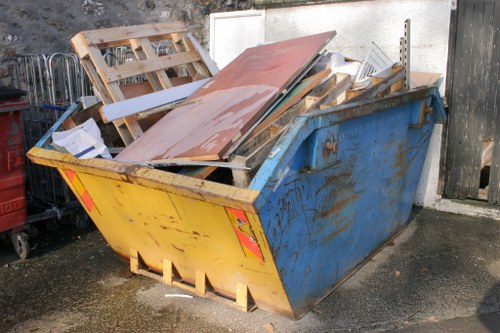 House Clearance Pinner focuses on delivering an eco-responsible approach to clearing properties across Pinner and surrounding boroughs. Our commitment to an eco-friendly waste disposal area means every job is assessed for reuse, recycling and low-impact removal. We work with local authorities' approaches to waste separation, respecting borough collection schemes that separate glass, mixed recycling, food waste and bulky items. This paragraph explains our ethos, combining community needs with practical steps to reduce landfill and support a sustainable rubbish area for residents.
We set a clear recycling percentage target for each clearance: a minimum of 75% of material diverted from landfill, with an aspirational target of 85% on suitable sites. This target is measured by weight and material type and tracked across our Pinner house clearance operations. By prioritising salvage, repair and materials recovery we reduce the carbon intensity of disposal. Our reporting shows how reused furniture, salvaged building materials and segregated recyclables contribute to the overall performance of house clearances in Pinner.

Local transfer stations and responsible routes
We route items through approved local transfer stations and materials recovery facilities (MRFs) to ensure legal and traceable processing. Working within the boroughs' systems—where kerbside separation often separates paper, card, glass, and mixed containers—helps us minimise contamination and secure higher recycling yields. We partner with transfer yards that prioritise reuse networks, specialist metal recyclers, and electrical waste processors, ensuring an organised and compliant flow from property to processing.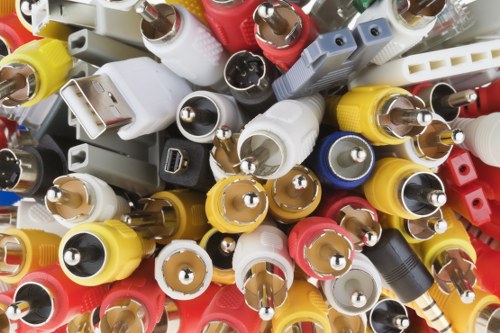
Partnerships with charities and community reuse
Our house clearances in Pinner actively connect usable items to charities and social enterprises. Desks, sofas, small appliances and good-condition textiles are offered to local charities, community centres and furniture banks. These partnerships extend the useful life of items and support local families in need. We maintain a cataloguing process to separate donate-able goods prior to deposit, and where appropriate we coordinate collections with charity partners to avoid double-handling and unnecessary transport emissions.In addition to charities, we work with specialist hazardous waste handlers for items such as asbestos-containing materials, controlled chemicals or certain batteries and lamps. This careful segregation aligns with the boroughs' hazardous waste policies and protects public health. Our teams are trained in correct on-site separation, ensuring that white goods, e-waste, and bulky wood or plaster are processed via the right channels rather than being sent to general waste.
To support community circularity we also facilitate reuse markets and pop-up clearance days where residents can reclaim or purchase reclaimed items. These small-scale events promote a neighbourhood-level sustainable rubbish area by encouraging repair, upcycling and local exchange. They also provide a transparent way for Pinner residents to see the benefits of sorting waste at source and keeping materials moving through a local circular economy.
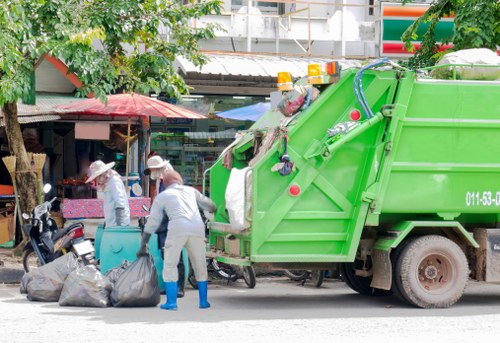 Low-carbon vans and fleet practices Our vehicle strategy for Pinner clearances includes a growing fleet of low-carbon vans, hybrid-support logistics and optimised routing algorithms to cut mileage. By combining multi-drop scheduling with vehicles that meet the latest emissions standards, we substantially lower the carbon footprint of each clearance. Crew training on efficient driving and load optimisation further reduces trips and fuel use, supporting our recycled materials targets by ensuring transport itself is as sustainable as possible.
We also document diversion rates and carbon reduction metrics for every job to provide visible evidence of environmental performance. This data helps shape continuous improvement: identifying which types of clearances yield the best reuse outcomes and where to focus stronger partnerships with local transfer stations and recycler networks. Transparent tracking fosters accountability and demonstrates how Pinner house clearance services can exceed minimum expectations for sustainable disposal.
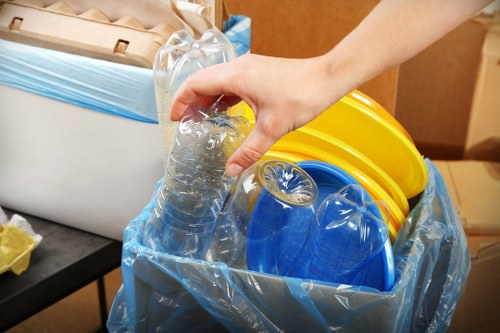 Practical recycling activities and borough alignment In practice, our teams follow borough guidance on waste separation: segregating mixed recyclables, compostable food waste where collections exist, and consolidating bulky recyclable items like metal and timber for specialist processors. We use clear labelling on-site, provide customers with reuse options, and ensure that any residual waste is sent to energy recovery facilities when landfill is the only remaining option. By aligning with local policies and investing in community partnerships, House Clearance Pinner supports a measurable, long-term move toward a greener, more sustainable rubbish area.
- Recycling target: minimum 75% diverted, 85% aspiration
- Local infrastructure: approved transfer stations and MRFs
- Community: charity partnerships and reuse events
- Fleet: low-carbon vans and route optimisation
- Compliance: borough-aligned waste separation and hazardous handling
House clearances in Pinner should be more than removal; they are an opportunity to return value to the community, reduce emissions, and support a sustainable rubbish area. Our integrated approach combines practical on-site separation, charity distribution, responsible transfer routes and a greener fleet to make eco-friendly waste disposal a reliable part of every clearance.